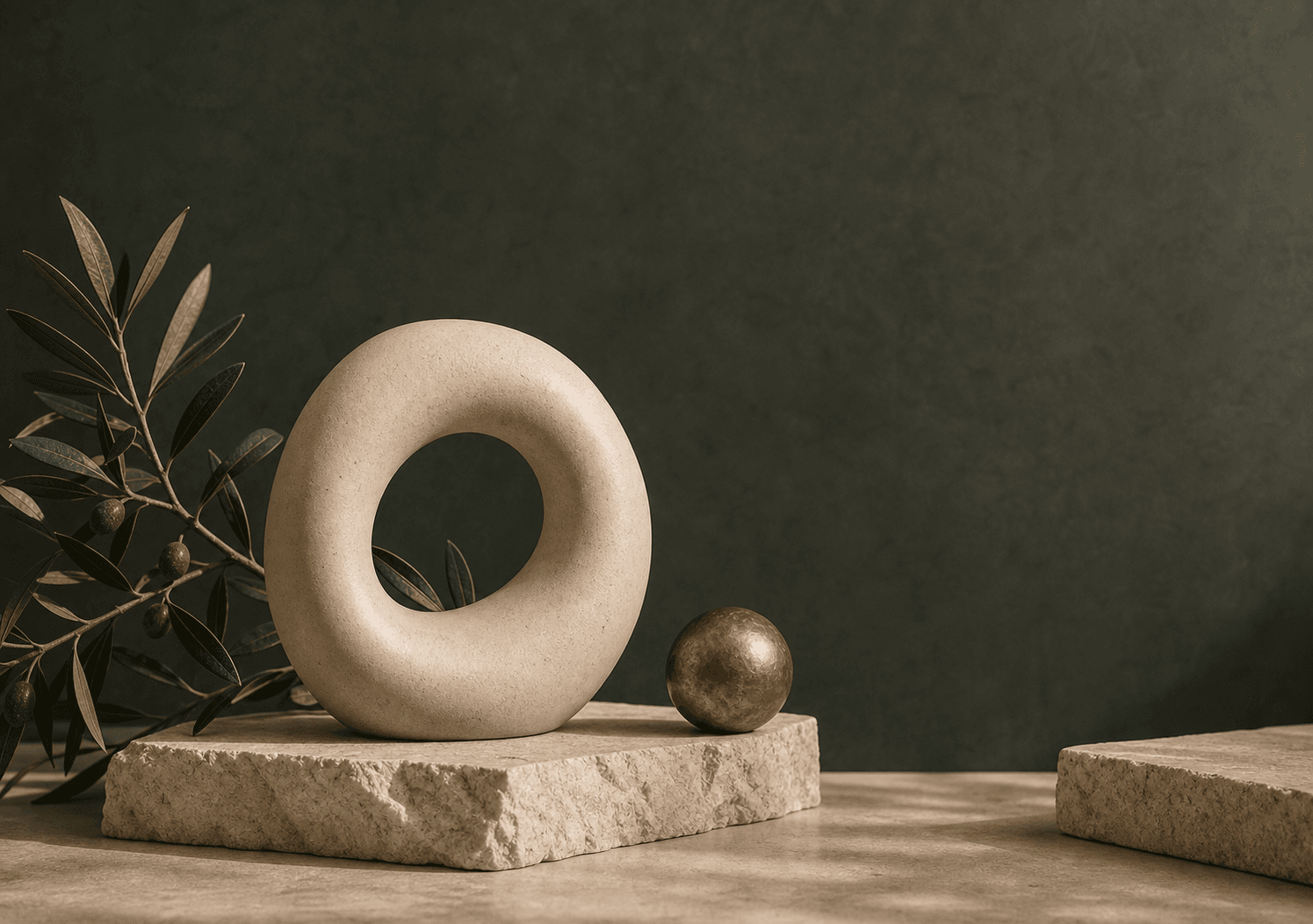
Luxury branding has moved away from the heavy signals that once did most of the work. The marble wordmark, the oversized promise, the campaign built around distance. Those cues still appear, but they rarely hold attention on their own.
The more interesting brands are doing something harder. They are becoming precise. They know what to leave out, where to slow the eye, and when to let material, rhythm, and service carry the meaning.
Restraint is not a lack of expression. It is editing with nerve. It asks a brand to decide what deserves emphasis and what can be trusted to the background.
That shift is easy to mistake for minimalism. It is not. Minimalism is a surface condition. The real work is judgment: what to emphasize, what to remove, and what to let a customer discover slowly.
Luxury today is not about being seen everywhere. It is about being remembered where it matters.
From Symbols to Systems
A logo can still anchor memory, but it cannot carry the whole experience. Modern luxury is built through systems: tone, cadence, product behavior, service detail, and the quiet choreography between them.
Materials and motion matter because they set the temperature of a brand. A slow fade, a restrained palette, a well-placed pause, or a product page that does not beg for attention can say more than another line of campaign copy.
The best systems leave room for the customer to enter. They do not explain every feeling. They create enough structure for trust, then let the details do their work.

Luxury Signal Map
The strongest luxury systems move from inherited symbols toward owned behavior.
Inherited cues
Material restraint
Service rhythm
Owned memory
The Human Advantage
Technology has raised the bar for what can be produced. Taste is now the more valuable filter. Customers can feel when an experience has been assembled by habit rather than shaped by judgment.
The brands with staying power will use intelligence without sounding automated. They will move faster without feeling rushed. Most of all, they will protect the small choices that make a brand feel handled by people.
Luxury is no longer a price point. It is a point of view, kept consistent when nobody is watching.
The Risk of Quiet Work
Quiet work asks more from the brand team. When there are fewer effects, every proportion, sentence, and transition becomes easier to judge. There is nowhere for weak thinking to hide.
That is why restraint should never be confused with absence. A quiet identity needs sharper rules, not fewer. It needs a clear view of how color behaves, how photography is cropped, how product pages speak, and how service moments sound when something goes wrong.
How Luxury Becomes Useful
Usefulness is still under-discussed in luxury. Too many premium experiences assume the customer will tolerate friction because the brand is desirable. That assumption is aging badly.
The new language of luxury is useful before it is impressive. It makes comparison easier, purchase calmer, support more graceful, and ownership feel considered after the first receipt.